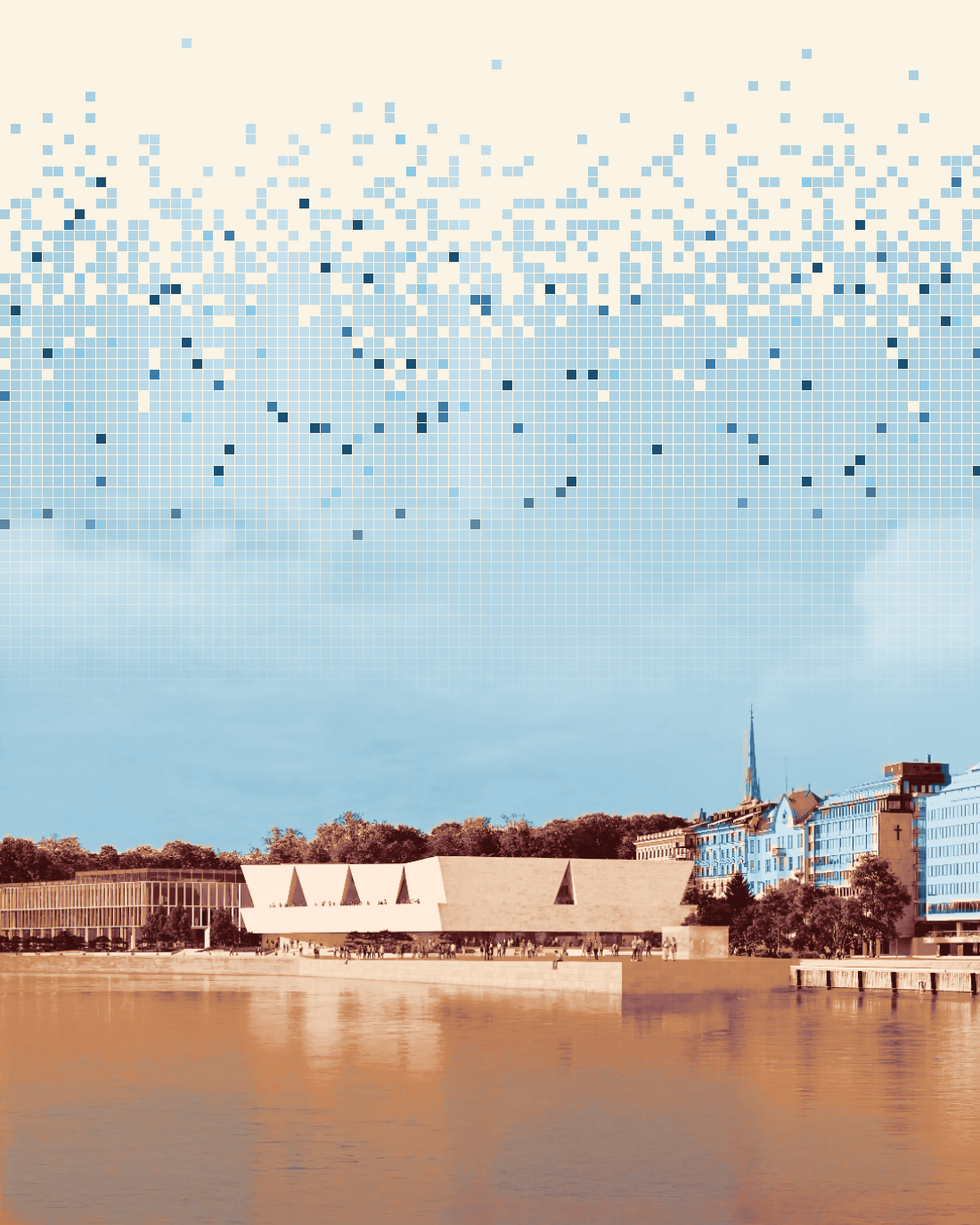
New architecture and design museum of Helsinki by JKMM Architects
Cities keep building containers for culture and hoping the culture shows up. Helsinki is about to test this at waterfront scale.
The city is spending the next decade turning its South Harbour into a "hub of culture and experiences". The council approved the detailed plan last month. The first moves: a renovated quay, a new architecture and design museum, and buildings for a hotel, offices and shops.
All of it is hardware. Good hardware, probably. But hardware.
What a flagship museum can and cannot do
In my research on repurposed urban sites, I kept meeting the same pattern. A museum draws people to a point, the way a cathedral anchors a square. It creates a destination, a reason to arrive.
But what makes the surrounding streets feel alive is usually smaller and less legible: the café that stays open late, the bakery people build a Saturday around, the maker whose shop you didn't expect. Urban vibrancy lives in that texture, not in the flagship.
This is the recurring blind spot of cultural district development. The plan accounts for the anchor. It rarely accounts for the ecosystem the anchor depends on.
Why the texture can't be added later
You could call that texture a detail the masterplan adds later — except it usually can't be.
The operators who produce it tend to choose a place early, before the footfall exists, when the decision is mostly risk. They commit to a district while it is still concrete dust and hoarding, because that is when space is affordable and identity is still up for grabs.
By the time a district feels finished enough to be safe, the people who would have given it character have often committed somewhere else. The window for attracting them is not after opening day. It is now, while the district is still on paper.
The real question: who comes first?
So the question a flagship raises is not architectural. It is who comes first.
The first businesses to open tend to define what a place becomes: its rhythm, its crowd, its identity. Every later tenant inherits the atmosphere the first generation creates. That makes the pioneer operators the most consequential — and most overlooked — decision in any urban regeneration project.
For Helsinki's South Harbour, this suggests a different planning question than the ones currently on the table. Not "what should the buildings look like?" but: what would bring the right founding operators to these buildings and the streets around them from the start? What rents, what lease terms, what permits, what signals of commitment would make an early bet on the South Harbour rational for a small cultural entrepreneur rather than heroic?
The lesson for cultural district development everywhere
Helsinki is not alone in this. Waterfront cultural quarters are a global genre — and their track record is uneven for a consistent reason. The projects that work treat culture as something that arrives through people making risky early commitments. The projects that struggle treat culture as a program the architecture will deliver.
You can build a container for culture. You can't build the culture.
What you can do is make the container easy to say yes to — early, when saying yes is hardest.
FAQ
What is Helsinki's South Harbour plan?
Helsinki is redeveloping its South Harbour (Eteläsatama) over the next decade into a district for culture and experiences. Approved plans include a renovated quay, a new museum of architecture and design, and buildings for a hotel, offices and shops.
Why do new cultural districts often feel lifeless?
Because masterplans deliver the hardware — buildings, squares, anchor institutions — but the everyday vibrancy of a district comes from small operators like cafés, bakeries and independent shops. These operators must commit early, when risk is highest, and plans rarely make that commitment viable.
What should cities do differently when planning cultural quarters?
Start with the founding operators, not just the buildings. Identify the kinds of entrepreneurs who create street-level life, and design leases, permits and early conditions that make it rational for them to commit before the district is proven.