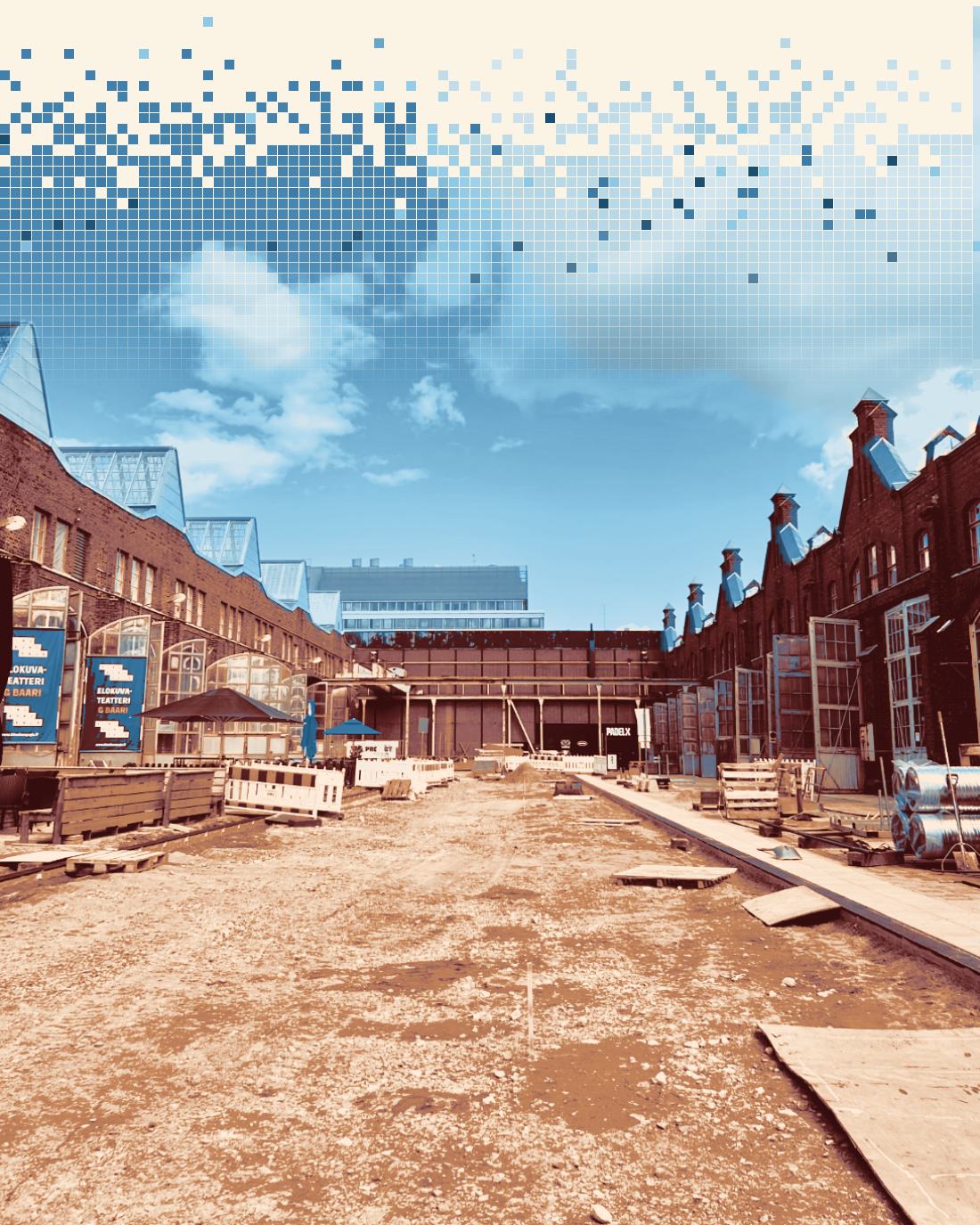
An early urban entrepreneur at Konepaja, Helsinki
Every vibrant district has a founding generation: the entrepreneurs who showed up before the area worked. Before the footfall, before the identity, before anything guaranteed they'd survive.
I interviewed them for my research on two repurposed industrial sites in Helsinki. They organised the events, chased the permits, installed the infrastructure, and built the identity every later tenant inherited.
Nobody assigned them this work.
What the founding generation actually does
On paper, these operators are ordinary tenants: a lease, a rent, a square-metre figure in a spreadsheet. In practice, they do something no line in a rent roll captures.
They give an unproven place its first reasons to visit. They create the events that put it on the map, the aesthetic that photographs well, the word-of-mouth that convinces the next entrepreneur it's safe to come. They often literally build things the site lacked: power, water, signage, stages.
Every tenant who arrives later inherits all of it, usually without knowing whom to thank.
The hidden tax
I've started calling this pattern the hidden tax. The operators who generate the most value often carry the most risk and receive the least support.
You could call that normal entrepreneurial risk, except the value they create doesn't stay with them. It gets capitalised into the rent roll. The district's rising attractiveness shows up as rising rents, and rising rents are paid by the very people who caused the rise.
By the time an area can charge premium rents, the people who made it attractive are often exhausted, priced out or gone. The place keeps their work; they don't keep the reward.
Why owners and developers should care
If you own or develop a place, your founding generation isn't another line in that rent roll. They're often the reason your first three years work at all, and the cheapest tenants to keep committed.
What they asked for in my interviews was strikingly modest: answers that arrive, permits that don't take a season, some sign that the owner sees the role they're playing. Not equity, not subsidies. Recognition and responsiveness.
That is not much, considering these are people who make your place come alive and build its value for the long term. Losing them is expensive in ways the spreadsheet only shows later: identity drains slowly, then the footfall follows it.
A question worth asking
The practical starting point costs nothing: identify your founding generation by name. Know which operators carried the district before it worked, what they are still carrying, and what would make them stay.
Do you know who your founding generation is?
FAQ
What is a "founding generation" in urban development?
The first wave of entrepreneurs who commit to an area before it has footfall, identity or proven demand. Their events, spaces and character-building work typically define what the district becomes.
What is the hidden tax on pioneer entrepreneurs?
The pattern where early operators create the value that makes a district attractive, but that value is capitalised into rising rents, which the pioneers themselves then face, often without extra support or recognition from owners.
How can property owners support their founding tenants?
Mostly through responsiveness: timely answers, faster permits, predictable terms, and visible acknowledgement of the role these tenants play. Retaining founding tenants is usually far cheaper than replacing the identity they created.