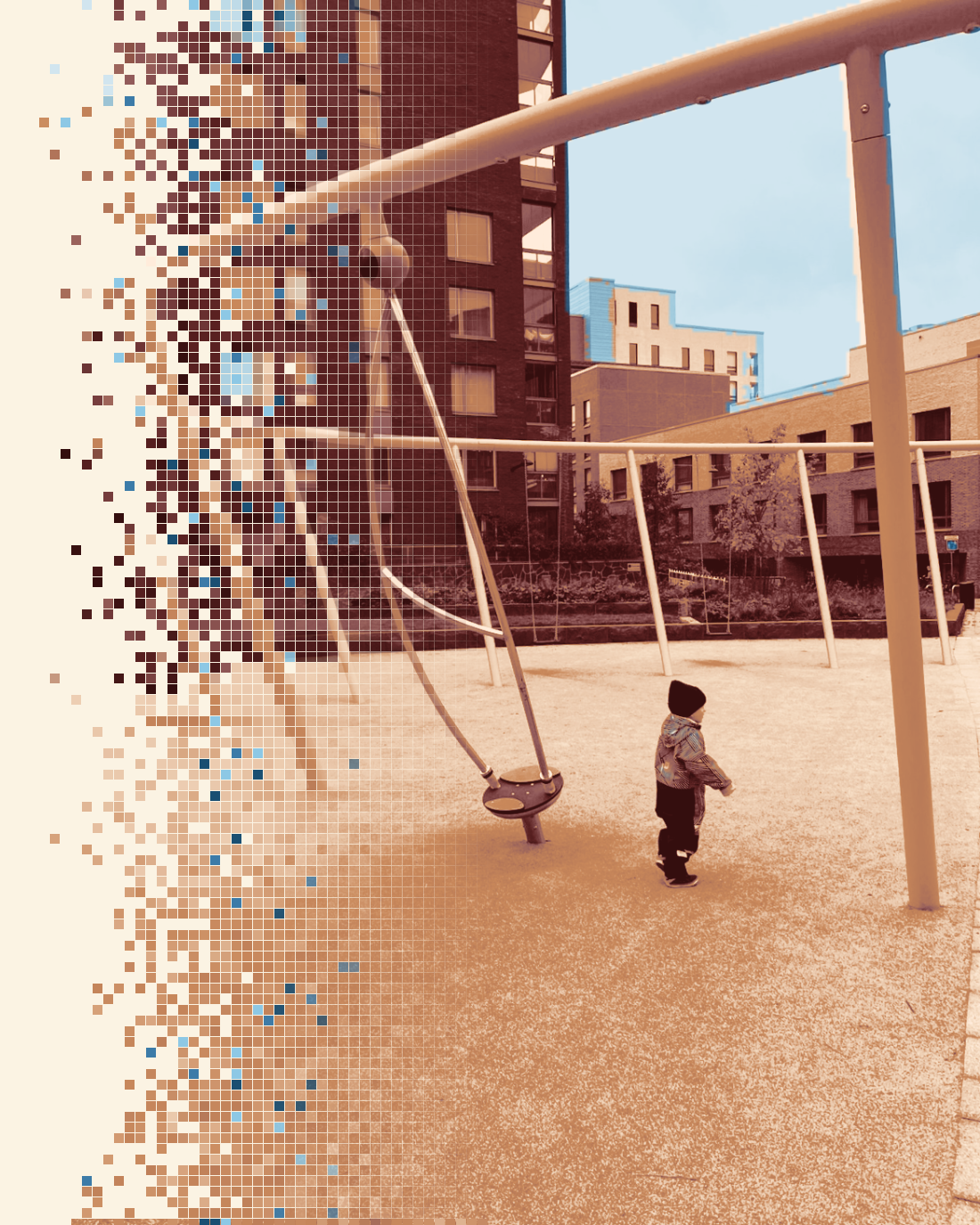
Kalasatama, one of the most dense neighbourhoods in Helsinki
Compact urban development is usually justified with two promises: more urban life, and stronger community.
The idea is appealing. Build more densely and you get more encounters, more street-level shops, cafés, foot traffic and everyday liveliness. And when an area is lively, people also become attached to it.
Research from Oslo challenges that promise, in a way that matters for Helsinki and every other city betting on densification.
What the Oslo study found
Mouratidis and Poortinga (2020) combined resident surveys with spatial data across the Oslo metropolitan area and examined how urban form, the liveliness of urban life, and social cohesion relate to each other.
The headline result: density and mixed land use do increase the liveliness of urban life, but at the same time they appear to weaken social cohesion.
In other words, the very qualities used to sell the compact city can produce street life without strong neighbourhood ties.
The second finding changes the picture
The study also contained a second, equally important observation. When comparing otherwise similar neighbourhoods, the livelier ones were also more cohesive.
So liveliness itself is not the problem. The problem is the assumption that dense construction alone is enough to produce it, and the community along with it.
Density raises the ceiling. It doesn't do the work.
Community doesn't happen by itself
Here lies one of the central design challenges for cities. It is easy to talk about height, floor-area efficiency, mixed land use and the number of services. But social cohesion doesn't emerge on its own.
It needs spaces, situations and recurring practices, and actors who sustain them.
A zoning plan can create the conditions for community. But it is entrepreneurs, kindergartens, housing companies and other local actors who create the community itself. What's needed are actors who show up, commit to the place, and maintain the settings where encounters can happen: the café that hosts the residents' evening, the courtyard that gets used, the market that repeats every week.
What this means for compact city planning
The practical implication is that densification strategies need a second layer alongside the physical one. Not only how many square metres and what mix of uses, but: who will run the shared spaces, what recurring situations will bring the same people together, and which local actors need conditions good enough to commit for years rather than seasons.
A compact city is not a promise of community. But it can be its starting point.
FAQ
Does higher urban density increase community?
Not automatically. Research from Oslo (Mouratidis & Poortinga, 2020) found that density and mixed land use increase the liveliness of urban life but tend to weaken social cohesion. Liveliness itself helps: among similar neighbourhoods, livelier ones were also more cohesive.
What is the difference between urban vibrancy and social cohesion?
Vibrancy is visible activity: people, foot traffic, open shops, street life. Social cohesion is the strength of ties and belonging among residents. A district can be full of life yet weak in neighbourhood bonds.
How can cities build community into dense neighbourhoods?
By supporting the actors who create recurring encounters (local entrepreneurs, kindergartens, housing companies, community organisers) and by planning spaces and practices that repeat, not just buildings.