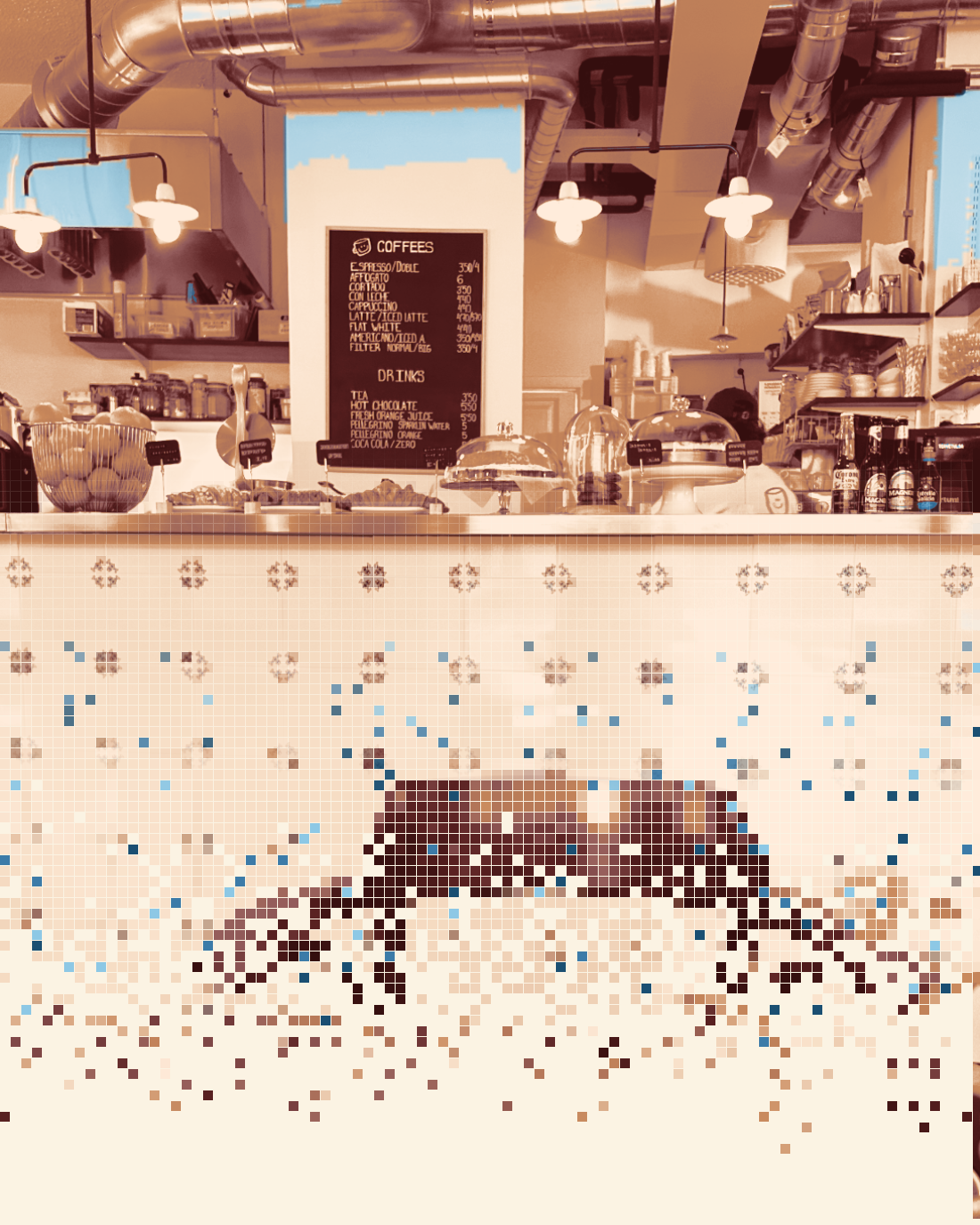
Where would you take a guest for coffee in your home town?
I don't mean the place whose name everyone recognises from the airport. I mean a café or restaurant where someone does things their own way. A place whose counter you won't find repeated, identical, in every town.
I asked this on Instagram after reading a column in Helsingin Sanomat, Finland's largest daily, about how Imatra, a small town on the eastern border, could attract more visitors. I wrote about street corners filled with chain cafés, and about small cafés whose display cases repeat the same thawed frozen pastries.
Edward Relph gave the gradual sameness of places a name back in 1976: placelessness.
I expected people to recognise the phenomenon. Instead, they started correcting me.
Finland has hundreds of places people care about
Over 600 comments arrived in two days. They named 367 distinct cafés and restaurants, mentioned 623 times in total, from Hanko on the south coast to Sodankylä in Lapland.
The most interesting thing was not the volume. It was the temperature.
People did not simply list cafés. They defended them. They described what gets baked where, why a place is worth the detour, and where they always have to go whenever they visit their home town. Imatra locals named several places of their own and wondered whether the columnist had even tried to look.
The comments did not confirm the idea that everywhere is the same. They revealed a different problem.
The places exist, but a visitor struggles to find them
Two comments summed it up:
"Ihania kahviloita on mutta niitä on aivan mahdoton vierailijan löytää." There are wonderful cafés, but they are nearly impossible for a visitor to find.
"Pieniä ja ihania löytyy kymmeniä, pitää vaan osata etsiä." There are dozens of small, wonderful ones. You just have to know how to look.
Chains do their job well, and that is exactly why they occupy the visible corners, the transport hubs and the top of the search results. Distinctive places tend to live in local knowledge instead: in friends' recommendations, neighbourhood groups and summer traditions.
The problem, then, is not always a lack of supply but its poor findability. A visitor meets the most visible offering and draws a conclusion about the whole town from it.
Distinctiveness is not concentrated in the big cities
A comment thread is not research, and it cannot be used to rank the café scenes of Finnish cities. Still, its geography was interesting.
Helsinki was mentioned for 26 places, but Joensuu for 12, though the city holds only a fraction of Helsinki's population. Lappeenranta produced 10 places, Vaasa and Pori eight each, and Uusikaupunki five.
Many of the recommendations were in small towns, villages and the countryside. More than one commenter noted that the local places start appearing the moment you leave the Helsinki region behind.
The conversation also grew parallel maps of its own. The celiac community shared, city by city, where genuinely good gluten-free is baked. One woman told how she travels from Tampere to Savonlinna every summer for a gluten-free Brita cake (I recommend having a taste if you ever have a chance!).
So these places do not mean just good coffee or a pretty interior. They are tied to belonging, to memories, and to how people experience their own home region.
People build places with their choices
Mariankatu 18, in Helsinki's Kruununhaka district, makes this visible.
When the block's previous shop closed, around forty local residents invested their own money to found a new neighbourhood café. The café, opened in 2021, became a meeting place owned collectively by the residents.
The example shows that the worry about places becoming identical does not belong only to urban planners and architects. Regular people recognise what an independent place gives its surroundings. Sometimes they found one themselves.
Usually the act is smaller. We visit an independent café, take a guest there, write a review, or recommend the place to someone who would never have found it otherwise.
Distinctiveness survives when enough people choose it.
The map makes local knowledge visible
I gathered all 367 places mentioned in the conversation into an open Google My Maps map.
The map is organised by region. Each pin shows how many times the place was mentioned, with a link to its Instagram account where one could be found.
The map is here: Small great cafes in Finland.
The mention count is not a quality score. It only tells how often a place came up in this one conversation. A place with a single mention may be the map's best example of knowledge only a local carries.
Visibility is part of vitality
Cities and municipalities talk a great deal about attractiveness and tourism. Yet their most interesting local places can remain completely invisible to a visitor.
A city cannot produce distinctiveness by decree. It is created by entrepreneurs, makers and customers. What a city can do is help people find it.
The visibility of independent places is not a minor communications question: they are what give a visitor a reason to linger, to return, and to recommend a town onward.
Still, the real antidote to placelessness is found in everyday life. In where we spend our money, and in what we tell others.
Places do not only need customers. They need people who make local knowledge visible.
FAQ
Where is the map? The open Google My Maps map is here.
How were the places chosen? The map includes the cafés and restaurants recommended in the comments of the original Instagram post.
Why is my favourite missing? The map is based on one conversation and is not comprehensive. Absence says nothing about a place's quality.
Can I still suggest places? Yes. Comment on the original post or send me a message.
Is the map a ranking? No. The mention count only tells how many times a place came up in one comment thread. It does not measure quality.